


Views: 0 Author: Site Editor Publish Time: 2026-06-23 Origin: Site


Purchasing industrial cutting equipment involves significant capital expenditure. Facilities often face severe operational bottlenecks when trying to process diverse materials on a single cutting bed. You can no longer rely on rigid legacy systems if you want to stay competitive. Modern manufacturing has shifted away from traditional die-cutting due to high custom tooling costs and inflexible setups. Instead, agile digital cutting solutions allow for short-run, customized, and multi-material production.
Finding the right Digital Cutter machine requires looking far past theoretical straight-line cutting speeds. You must focus deeply on tooling versatility, vacuum hold-down capabilities, and software-driven yield optimization to guarantee success. We will explore how different substrates demand specific tooling setups. You will also learn the core evaluation criteria for selecting a system. Finally, we will outline how to match a machine tier to your actual production volume.
Versatility lives in the tool head: The best machines use modular, quick-change tool heads (oscillating, drag, routing) to switch seamlessly between dense composites and flexible leather.
Hold-down dictates accuracy: A multi-zone vacuum table is non-negotiable when transitioning from porous corrugated board to non-porous foams.
Software drives ROI: Advanced nesting and camera registration software often impact final profitability more than raw gantry speed.
Factor in consumables: Total cost of ownership must account for cutting mats, specialty blades, and router bits, not just the machine's sticker price.
Legacy die-cutting fails miserably for multi-substrate operations. You face prohibitive custom die costs whenever you attempt low-volume composite runs. Die-cutting requires physical metal dies. Creating these dies takes considerable time and money. Storage for thousands of custom dies consumes valuable warehouse space. It makes short-run jobs economically impossible.
Different substrates behave differently under a cutting blade. This creates a fascinating engineering conflict for machine builders. Rigid composites demand immense torque and structural stiffness. The machine must force a spinning router bit through dense carbon fibers without vibrating. Conversely, flexible leather requires precision dragging. You need optical alignment to prevent unwanted stretching. If you drag a dull blade across a loose hide, the material tears instantly. You cannot force a single rigid tool to do both jobs effectively.
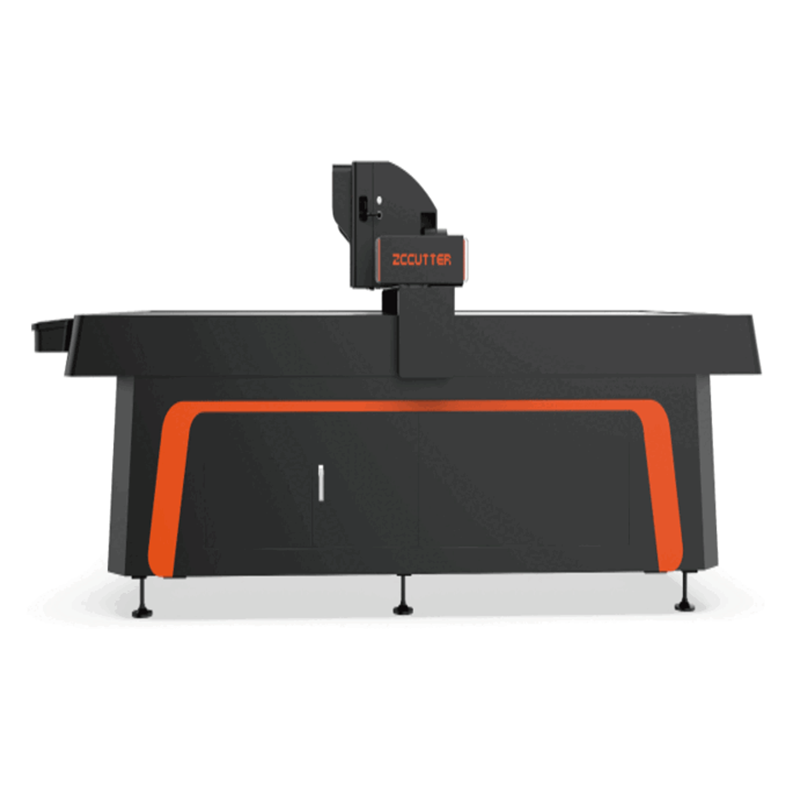
The solution lies in the modular digital flatbed cutter. This bridge technology allows you to process wildly different materials on the same shift. However, success depends entirely on how you configure the tool head. You must understand the physics of your materials. Only then can you leverage the full power of a digital cutting solution. Modularity allows operators to swap a routing spindle for an oscillating knife in minutes. This flexibility transforms a static production floor into an agile manufacturing hub.
You must pair specific physical requirements with the correct tooling hardware to achieve professional results across various substrates.
Corrugated board demands specific attention to edge quality and structural integrity. Packaging manufacturers understand the frustration of cracked liners.
Required Tools: Creasing wheels, V-cut tools, and drag knives.
Success Criteria: You need clean folds without any liner cracking. The system must handle double-wall corrugated materials without crushing the underlying flutes. Proper creasing wheel pressure ensures the box folds perfectly on the automated packaging line. Operators must adjust the downward pressure dynamically. Too much pressure destroys the flute structure. Too little pressure creates a weak fold.
Foam processing introduces massive challenges around friction and heat generation. Cutting thick foam is notoriously difficult without the right blade speed.
Required Tools: Pneumatic or electric oscillating knives.
Success Criteria: You must manage blade friction carefully to prevent material melting. A high-quality setup maintains absolute edge squareness on material thicknesses up to 50mm and beyond. Electric oscillators work well for softer foams like EPE. Dense foams require the raw power of pneumatic oscillation. Air-driven tools provide the aggressive stroke length needed to slice through tough PU foam without bogging down.
Animal hides and woven textiles lack structural rigidity. They stretch easily during processing, ruining dimensional accuracy.
Required Tools: Driven rotary blades, punch tools, and camera vision systems.
Success Criteria: Flawless contour recognition is vital. The software must avoid natural defects in animal hides automatically. You also need zero material shifting during high-speed cuts. Rotary blades slice cleanly through tough fibers without pulling or fraying them. Driven wheels rotate continuously, slicing down into the cutting mat cleanly. Punch tools create perfect holes for stitching without distorting the surrounding leather.
Composites destroy inferior cutting tools. They are highly abrasive, physically tough, and generate hazardous dust.
Required Tools: Heavy-duty routing spindles for cured composites. Ultrasonic cutting tools handle uncured pre-pregs efficiently.
Success Criteria: Dust extraction efficiency is critical for operator safety. It also prevents abrasive dust from ruining the machine bearings. You need a highly rigid gantry architecture. This prevents tool deflection when routing dense carbon fiber panels. If the gantry flexes even a millimeter, your aerospace parts will fail quality inspection. Ultrasonic blades vibrate at high frequencies to slice through sticky pre-pregs cleanly.
Substrate Tooling Summary Chart | |||
Substrate Category | Primary Tooling | Critical Challenge | Optimal Result |
|---|---|---|---|
Corrugated Board | Creasing wheels, V-cut | Crushing flutes | Clean folds, no cracking |
Foams (EVA, PU) | Oscillating knives | Friction melting | Square edges up to 50mm |
Leather | Rotary blades, Cameras | Stretching, hide defects | Flawless contour extraction |
Composites | Routing spindles, Ultrasonic | Tool deflection, dust | Precise cuts, safe extraction |
Not all cutting systems deliver the same industrial performance over time. You must evaluate the underlying architecture thoroughly before committing capital.
Welded steel frames easily outperform bolted aluminum alternatives. When routing dense composites, heavy-duty steel absorbs harmful vibrations. Bolted aluminum frames often flex under high acceleration. This flexing causes dimensional inaccuracies and poor edge finishes. A solid foundation is non-negotiable for industrial applications. Vibrations travel directly from the tool head into the frame. If the frame cannot absorb this energy, the blade chatters against the material.
Holding down the material dictates the ultimate accuracy of your cut. Automated, software-controlled vacuum zones are critical. They isolate suction exactly where the material sits on the table. This targeted flow holds down small, intricate parts securely. It also secures highly porous materials like corrugated board firmly against the cutting bed. High-flow vacuum pumps pull air continuously through the sacrificial mat. If you lose vacuum pressure during a cut, the material shifts and the entire sheet is ruined.
Hardware means nothing without intelligent control systems. Open-architecture software must integrate smoothly into your existing ERP platforms. True-shape nesting capabilities are crucial for processing expensive materials. Smart nesting algorithms fit irregular shapes tightly together like a complex puzzle. This minimizes expensive scrap and boosts your daily profit margins. Good software reads industry-standard files without requiring painful manual conversions. It automates the transition from design file to physical cut.
Print-to-cut workflows require extreme precision every single time. High-resolution CCD cameras ensure perfect alignment. These cameras read registration marks printed directly on the packaging. The software then compensates for any material stretch or slight rotation. This guarantees the blade perfectly follows the printed graphic. Optical systems correct physical material distortion digitally. They save thousands of dollars in misaligned cuts on expensive printed substrates.
Many buyers focus only on the initial sticker price. You must look deeper to build a sustainable production environment and avoid nasty surprises.
Manufacturers love to advertise theoretical straight-line speeds. You should ignore these metrics entirely when evaluating a Digital Cutter machine. Real-world throughput depends heavily on cornering acceleration and rapid deceleration. Tool-change times also dictate your daily output. A machine cutting incredibly fast in a straight line might stall during complex curved paths. Watch how quickly the machine lifts the blade, turns, and plunges back down. That cycle time matters more than straight-line sprinting.
Operating industrial equipment involves ongoing operational expenses. You will frequently replace sacrificial cutting underlays. Conveyor belts and static mats wear down over time from constant blade scoring. Router bits dull quickly when processing abrasive fiberglass or carbon fiber. Specialty oscillating blades break if operators push them too hard. Track these replacement rates carefully to maintain realistic operational budgets. Buying cheap blades often costs more in the long run due to excessive machine downtime.
Moving to a digital workflow changes your core hiring requirements. The skill set shifts away from mechanical setup and wrench-turning. Your operators must now manage software configurations confidently. They need strong CAD troubleshooting skills to fix bad vector files sent by clients. Training your staff to handle software diagnostics takes time and structured effort. You must invest in their software education to unlock the machine's true potential.
Floor space costs significant money in any factory. Calculate the total footprint required for your new system before purchasing. The machine itself is just the beginning of the spatial requirement. You must leave adequate room for automated sheet feeders and large roll-off units. Safety perimeter zones, optical light curtains, and material staging areas also consume valuable factory space. Workflow logistics dictate how efficiently material moves from inventory, onto the cutting bed, and off to shipping.
Finding the right system means matching capabilities to your specific production volume. Overbuying wastes precious capital. Underbuying creates immediate and painful bottlenecks.
Prototyping & Sample Makers: This tier handles low-volume, high-mix environments perfectly. Design studios and R&D labs fit this profile. Focus on a compact factory footprint and everyday ease of use. Prioritize multi-tool versatility over extreme conveyor automation. Operators load sheets manually, allowing quick transitions between foam inserts and leather prototypes.
Mid-Volume Production (Flatbed): Standard sign, packaging, and custom leather shops thrive in this middle tier. Focus deeply on vacuum hold-down reliability across large surfaces. Demand standard, robust tool configurations that run continuously. These machines run full daily shifts and require durable gantry designs to maintain accuracy across large boards without breaking down.
High-Volume Automated Lines (Conveyorized): Continuous roll-to-roll textiles or pallet-fed corrugated operations need heavy automation. Human intervention slows these lines down. Focus entirely on auto-feeding and robotic unloading systems. Continuous cutting software must manage the conveyor belt seamlessly. These systems eliminate manual handling, drastically increasing daily throughput. They run lights-out shifts to churn through massive packaging orders.
The best digital cutting equipment is the one configured exactly for your most difficult substrate. Do not fall for aggressive marketing claims about top speeds. You need structural rigidity, intelligent software, and versatile tool heads. Your operational success relies heavily on vacuum power and precise material registration. Focus on the actual mechanics of cutting your toughest materials safely and accurately.
Take immediate action before requesting a formal quote. Send your hardest, most complex material files directly to the manufacturer. Provide them with physical samples of your specific composites or foams. Demand a live test cut and a detailed time study. This evidence-oriented approach ensures the machine will actually perform in your unique production environment. Never buy a complex machine based on a simple brochure.
A: Varies by tool. Routing can handle thick composites easily. Oscillating knives typically max out around 50-100mm for foams. The exact limit depends entirely on the foam's density and the specific blade length installed.
A: Yes. However, it requires a machine equipped with a heavy-duty spindle for routing and a modular carriage. This carriage must also accept drag or rotary knives. Furthermore, you need a durable conveyor belt capable of surviving both distinct processes.
A: Digital cutters avoid burnt edges completely. They eliminate toxic fumes, which is critical when processing PVC or EVA foams. They also prevent edge-hardening associated with laser cutting. This makes physical blades vastly superior for these specific substrates.
A: True-shape nesting is an advanced software algorithm. It fits complex, irregular shapes tightly together on a single sheet. This maximizes your material yield. It is absolutely vital for reducing waste when cutting high-cost materials like natural leather and aerospace composites.

