


Views: 0 Author: Site Editor Publish Time: 2026-09-29 Origin: Site


Flexible packaging materials present a massive opportunity for modern converters. However, substrates like shrink sleeves and thin films bring severe production headaches. They are notoriously prone to stretching and sudden ink adhesion failure. Extreme heat distortion also plagues these sensitive materials during high-speed runs.
When upgrading your production floor, you cannot afford guesswork. Investing in new equipment requires understanding web tension mitigation thoroughly. You also need to know how presses handle non-porous substrates. All of this must happen without sacrificing your target line speeds.
This guide breaks down the mechanical and chemical realities of flexible packaging production. We will explore advanced tension control, surface treatment, and thermal management. You will gain actionable insights to evaluate scalability accurately. This knowledge ensures you select the right equipment for your toughest film applications.
Web handling is the primary bottleneck: Precise closed-loop tension control is non-negotiable for flexible films to prevent misregistration.
Ink and substrate matching dictates success: Non-porous materials require specific surface treatments (corona) and precise anilox-to-plate ink transfer to ensure adhesion.
Equipment configuration matters: Central Impression (CI) cylinders offer superior support for highly extensible films compared to standard inline configurations.
ROI depends on run length: A modern flexo label printing machine outperforms digital in mid-to-long runs but requires rigorous setup and tooling standardization to maintain profitability.
Printing on paper is relatively forgiving. Printing on unsupported films requires a completely different engineering approach. Flexible materials demand exact mechanical control from unwind to rewind.
Substrates like low-density polyethylene (LDPE) and polyethylene terephthalate (PET) react aggressively to physical stress. When you apply mechanical pull, they stretch instantly. We call this material necking. The web becomes narrower as it stretches. This stretching ruins your print registration immediately. Thermal stress compounds this issue. When these materials pass under curing lamps, they often shrink. If tension is too high, the web simply snaps.
Substrate distortion directly destroys your profit margins. Poor web handling triggers several measurable business losses.
Wasted Material: Stretching ruins hundreds of feet of expensive film before operators notice.
Elevated Scrap Rates: Inconsistent tension causes persistent color misregistration throughout the roll.
Rejected Batches: Brands will reject entire orders if brand colors do not align perfectly.
Machine Downtime: Frequent web breaks require operators to stop the press and rethread the machine entirely.
How do we evaluate a modern press for flexible packaging? You must look beyond simple print speeds. Consistent web tension is the ultimate success metric. A capable flexographic printing machine isolates tension zones effectively. It must maintain perfect control during splice changes and speed ramps. Minimal setup waste is another critical benchmark for success.
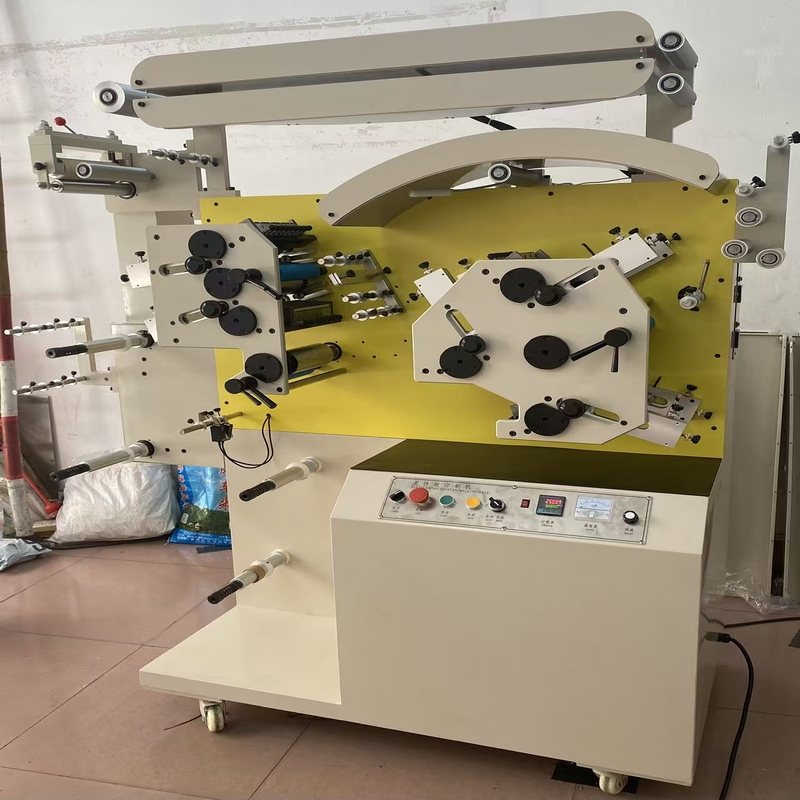
Processing films requires specialized architecture. You cannot run 12-micron shrink sleeves on a press built for thick paperboard. The mechanics must adapt to the substrate.
Tension control must act faster than human reflexes. This requires servo-driven in-feed pacing. Dancer rollers absorb sudden web fluctuations smoothly. They work alongside closed-loop load cells. Load cells measure the exact tension applied to the film. They send immediate signals to the servo motors. The motors adjust their speed in milliseconds. This closed-loop system isolates tension zones perfectly.
The physical layout of the print stations determines what materials you can run successfully. There are two primary architectural designs to consider.
Central Impression (CI): The CI press is the gold standard for highly stretchable films. It wraps the flexible web around a single large drum. The drum supports the material continuously as it passes each color station. The film cannot stretch because it never leaves the drum's surface.
Inline Flexo: Inline presses position print stations horizontally in a line. Unspupported film can flutter between these stations. However, modern servo-driven inline presses handle many flexible applications well. They are often sufficient for supported films and heavier gauge packaging. They also excel at hybrid label and shrink-sleeve runs.
Non-porous plastics naturally repel liquids. If you apply ink to untreated LDPE, it will wipe right off. You must alter the surface tension of the material. We measure this surface energy in dynes. Inline corona or plasma treaters are mandatory here. They shoot high-voltage electrical arcs across the web. This process oxidizes the plastic surface instantly. It raises the dyne level enough for the ink to bond securely. You must perform this treatment immediately before printing.
Transferring ink to smooth films requires extreme precision. Any microscopic error in ink volume causes major visual defects.
The anilox roller determines exactly how much ink reaches the plate. Cell volume and line screen dictate your print quality. Smooth, non-absorbent flexible substrates require specific calibrations. You generally need higher line screens and lower cell volumes. If you apply too much ink, it cannot absorb into the plastic. It spreads out instead. This causes severe dot gain and ugly ink mottling.
Ink selection drastically alters your curing requirements. Solvent inks were the historical standard for flexible films. They dry quickly through evaporation and bond well to plastics. However, the industry is transitioning heavily to UV/LED curing.
UV and LED inks offer vibrant colors and instant curing. But they introduce a major risk: heat distortion. UV lamps generate intense heat. This heat will melt or warp thin films instantly. Modern curing systems require chill rollers or cold-foil mechanisms. Chill rollers circulate cold water inside the cylinder. They pull heat away from the web as the ink cures. This prevents thermal damage entirely.
Ink Type | Curing Mechanism | Common Applications | Thermal Risk Level |
|---|---|---|---|
Solvent-Based | Evaporation (Hot Air) | High-speed food packaging | Low to Medium |
Water-Based | Evaporation (Hot Air) | Paper, heavy supported films | Low |
UV Arc | Ultraviolet Light | High-end labels, shrink sleeves | High (Requires chill rollers) |
UV LED | LED Light Arrays | Heat-sensitive thin films | Low (Cold curing process) |
You must acknowledge practical design constraints when printing films. Managing heavy ink coverage is notoriously difficult. Wet ink trapping can cause colors to bleed into one another. Trap tolerances on stretchable webs require careful prepress adjustments. Designers must understand that fine text might distort if the web stretches even slightly.
Running high-speed presses with flexible materials introduces significant safety risks. Facility managers must prioritize compliance and environmental safety.
Solvent-based inks require strict handling protocols. They emit volatile organic compounds (VOCs) into the air. OSHA mandates explosion-proof environments for these chemicals. Your facility must capture these VOCs safely. Most plants use thermal oxidizers for this purpose. The oxidizer burns off the harmful emissions before they reach the atmosphere. Proper facility ventilation is strictly non-negotiable.
Web breaks happen during high-speed flexible runs. When thin film snaps at 600 feet per minute, it creates chaos. The material wraps tightly around the spinning rollers. Operators must clear these jams quickly but safely. Lockout/tagout procedures are legally required here. Never allow operators to cut film away while the machine is energized. Establish clear operational protocols for rethreading the press.
Flexible packaging often holds food products. This introduces a separate layer of regulatory compliance. You must use Low Migration (LM) inks if the packaging involves direct or indirect food contact. FDA-compliant curing protocols ensure that ink chemicals do not bleed through the film. Insufficient curing leaves uncured monomers on the substrate. These monomers can contaminate the food inside the package.
Choosing the right printing technology defines your long-term profitability. Flexography sits perfectly between digital and gravure for flexible packaging.
Every print technology has a financial sweet spot. Flexography dominates high-speed, high-volume flexible packaging runs. When you print 50,000 feet of shrink sleeves, digital printing becomes incredibly expensive. Digital ink costs will quickly consume your margins. Flexography drastically undercuts digital on unit cost for these mid-to-long runs.
Compared to gravure, flexo offers major prepress advantages. Gravure requires heavy, engraved metal cylinders. These cylinders cost thousands of dollars and take weeks to produce. Flexography uses photopolymer plates. These plates are far cheaper and faster to manufacture. This allows you to scale production rapidly while keeping prepress expenses manageable.
Buyers need a clear framework when shortlisting equipment. Use this logic to guide your purchasing decisions.
Analyze Your Product Mix: Are you printing mostly paper labels or unsupported films?
Assess Material Thickness: If your product mix is 80% shrink sleeves under 50-micron thickness, you need specialized hardware.
Prioritize CI Architecture: For highly extensible, ultra-thin films, prioritize a CI press design.
Demand Chill Rollers: If you plan to use UV inks on thin films, chill rollers are strictly mandatory.
Automate Registration: Look for automated registration systems to reduce setup waste on expensive substrates.
Mastering flexible packaging materials is a complex but rewarding endeavor. Success relies entirely on a critical triad: precise tension control, optimal surface treatment, and strict thermal management. If you conquer these three elements, you can run the most difficult films profitably.
Your next step requires physical validation. Do not buy equipment based on brochures alone. Encourage your team to request a live substrate test. Bring your most notoriously difficult film to the manufacturer. Demand a trial run at target production speeds. You must validate registration accuracy and ink adhesion in person before finalizing any purchase.
A: Yes, but it typically requires substantial retrofitting. You will need to add chill rollers to manage heat. Advanced tension control systems and closed-loop load cells are mandatory. You will also likely need inline corona treaters. These upgrades allow standard narrow-web presses to handle unsupported films like shrink sleeves successfully.
A: It depends heavily on the press architecture. Central Impression (CI) presses can handle highly extensible films down to 10-12 microns. They offer continuous web support. Standard inline presses generally struggle with materials below 30 microns unless they feature specialized, upgraded web transport systems.
A: You should use industry-standard physical tests. The tape test is the most common method. Apply a specific tape to the cured ink and rip it off rapidly. The scratch test uses a specialized stylus to measure durability. Always verify material dyne levels prior to printing to prevent these failures.

