


Views: 0 Author: Site Editor Publish Time: 2026-06-10 Origin: Site


Purchasing production equipment forces a critical decision. You must choose between paying a massive premium for a legacy European brand or risking your floor operations on a Chinese alternative. This bottom-of-funnel dilemma frustrates many manufacturers. Does a 3x price tag truly guarantee better results? Are you just funding a brand's marketing department? Today's manufacturing reality has changed significantly. The technological gap between East and West has narrowed. Premium Chinese builders now source the exact same core components as their European rivals. We will provide a transparent, objective evaluation framework. You will discover how to assess actual cutting tolerances. You will also evaluate ongoing operational costs and calculate downtime risks realistically. This guide separates marketing myths from factory-floor realities. It equips you to make a confident, data-driven machinery investment.
Component Parity: High-end Chinese and European machines often share identical critical components (e.g., Japanese servo motors, Swiss cutting blades), narrowing the mechanical precision gap.
The Software Divide: European brands generally lead in proprietary, deeply integrated CAD/CAM software ecosystems, while Chinese alternatives rely on adaptable, open-source, or third-party RIP software.
TCO vs. Initial Price: A Chinese digital cutter machine can save 40-60% upfront, but ROI depends heavily on the local distributor’s after-sales network and spare parts availability.
Decision Matrix: European machines suit 24/7 zero-downtime corporate environments; premium Chinese machines are optimal for scaling mid-market businesses with in-house technical adaptability.
Modern manufacturing relies heavily on globalized supply chains. The concept of a purely "European" or "Chinese" machine is largely outdated. Builders across the globe buy parts from the same specialized vendors. You will find Japanese Panasonic or Yaskawa servo motors driving the gantries of both systems. You will see Taiwanese PMI or HIWIN linear guide rails providing the smooth tracking required for high-speed cutting. The raw mechanical ingredients are virtually identical at the high end of the market.
However, we must distinguish between premium manufacturers and budget clones. The Chinese market is vast. It includes highly advanced engineering firms and lower-tier assemblers. Budget white-label clones often compromise on chassis rigidity, wiring standards, and quality control. They target buyers looking for the absolute lowest price. You should actively avoid these bottom-tier imports for serious production environments.
Premium Chinese manufacturers operate differently. They invest heavily in R&D. They maintain established global distributor networks. They hold verifiable international certifications like CE and ISO. These companies build heavy-duty steel frames. They mill their gantry surfaces using high-precision CNC machining centers. Their mechanical assemblies rival Western standards.
So, what exactly is the European value proposition? European brands offer more than just hardware. They provide extremely stringent quality control before a machine ever leaves the factory. They offer polished brand prestige. Most importantly, they deliver legacy reliability. A European manufacturer has likely spent decades refining its assembly processes. Their wiring harnesses are immaculate. Their documentation is flawless. You pay a premium for this meticulous attention to detail and the peace of mind it brings.
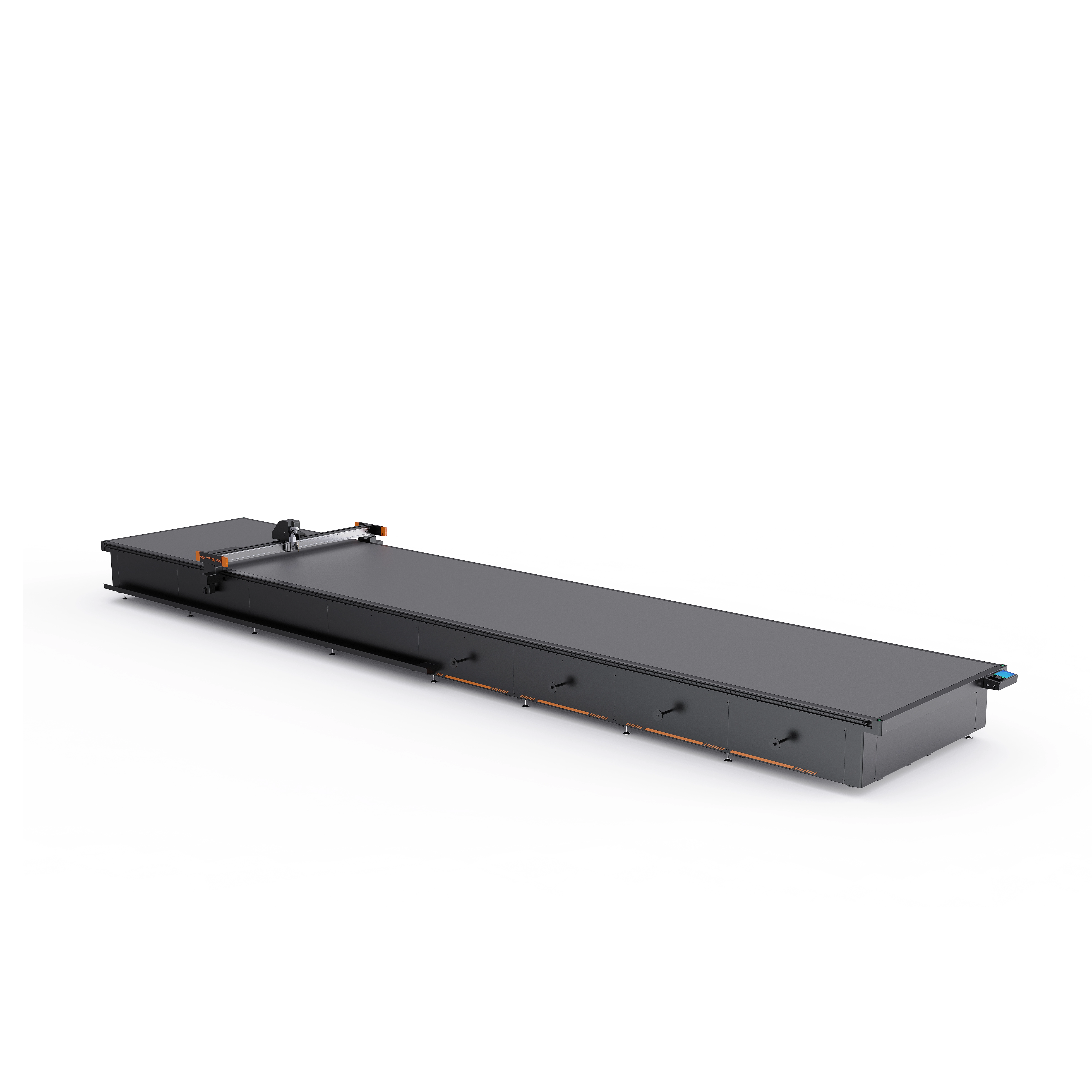
Buyers often assume imported machines struggle with precision. This assumption is mathematically incorrect at the premium tier. We measure mechanical tolerances strictly. A standard requirement for commercial cutting accuracy is ±0.1mm. High-end Chinese and European machines both hit this standard effortlessly. Shared CNC machining standards dictate this reality. When you pair a rigid steel chassis with closed-loop Japanese servo motors, the machine physically cannot deviate. Mechanical precision is no longer the primary differentiator.
Tooling versatility is another critical performance metric. A modern Digital Cutter machine must handle diverse materials. You need quick-swap modular cutting heads. These include oscillating knives for foam, creasing wheels for corrugated board, and high-speed routers for acrylic. Both regions offer extensive, interchangeable tooling modules. Premium Chinese brands have fully caught up in this area. They offer robust pneumatic and electric tooling options.
The true divide lies in software and workflow integration. European brands hold a distinct advantage here. They develop seamless, proprietary software ecosystems. Their CAD/CAM interfaces integrate flawlessly with factory ERP systems. This closed ecosystem minimizes operator error. It automates nesting, toolpath generation, and material handling. The learning curve is incredibly short. Operators simply scan a barcode, and the machine executes the job perfectly.
The Chinese approach requires more flexibility. These machines usually rely on third-party RIP software like Caldera or Onyx. Operators must manually import standard DXF or PLT vector files. They assign toolpaths and define cutting depths within an adaptable interface. This process introduces a steeper learning curve. Your operators must handle minor integration tweaks. They need a deeper understanding of vector geometry and machine parameters. If your team is technically proficient, this open architecture offers immense freedom. If you rely on unskilled labor, it introduces potential workflow friction.
Feature Category | European Brands | Premium Chinese Brands |
|---|---|---|
Mechanical Precision | ±0.1mm standard. Extremely high consistency. | ±0.1mm standard. Achieved via identical servos. |
Tooling Options | Proprietary modular heads. Highly refined. | Universal modular heads. Highly adaptable. |
Software Ecosystem | Closed, proprietary, ERP-integrated. | Open, relies on third-party RIP software. |
Operator Skill Required | Low. Automated workflows reduce errors. | Medium to High. Requires vector knowledge. |
Capital expenditure drives most machinery sourcing decisions. The upfront price delta is massive. European machines routinely command a 50% to 150% premium over top-tier Chinese equivalents. You might face a $150,000 price tag for a European unit. A comparable Chinese machine might cost $60,000. This immediate $90,000 savings is incredibly tempting for growing businesses. However, seasoned buyers know we must look beyond the invoice.
Hidden setup costs complicate the math. You must factor in international freight, which fluctuates wildly. Import duties and tariffs can add 10% to 25% to the landed cost of a Chinese machine. European brands often have regional headquarters. They might include freight and installation in their premium price. Conversely, you usually pay separately for a technician to install an imported machine. You must also budget for initial operator training. Training takes longer on open-source systems.
Long-term consumables heavily impact your ongoing operational costs. This area reveals a major hidden advantage for imported machines. Cutting blades, routing mats, and router bits wear out constantly. European manufacturers often design proprietary tooling holders. You must buy their specific, branded replacement blades. A single proprietary blade might cost $35. Chinese machines typically use non-proprietary, universal tool holders. You can buy standard tungsten steel blades from industrial suppliers for $5 each.
Over a five-year lifespan, consumable costs accumulate rapidly. High-volume production floors burn through dozens of blades weekly. Locking yourself into a proprietary consumable ecosystem creates an expensive ongoing dependency. The open standard of imported machines dramatically reduces these long-term operational expenses.
Production downtime destroys profit margins. You must evaluate after-sales support through the lens of downtime math. A machine saving you $50,000 upfront loses its value entirely if you wait 14 days for a replacement motherboard. Missed client deadlines and idle labor costs erase capital savings very quickly. Support logistics are the true battleground in this debate.
European brands operate a direct support model. They employ regional technicians directly. They offer robust Service Level Agreements (SLAs). If your machine goes down, a factory-trained technician arrives within 24 to 48 hours. They carry common spare parts in their vans. They diagnose and fix the issue immediately. You pay a premium for this insurance policy, but it guarantees production continuity.
Chinese brands rely heavily on local third-party distributors. This model shifts the risk to your purchasing process. You are not just buying a machine; you are buying the distributor's competence. A great distributor provides an experience identical to a European brand. A poor distributor leaves you stranded. You must aggressively vet the local dealer before signing any purchase order.
Timezone differences create practical friction if the distributor fails. Troubleshooting directly with overseas engineers is frustrating. A 12-hour timezone difference means one email exchange per day. Minor software bugs take days to resolve. You cannot afford this delay.
Audit Local Inventory: Demand a physical or video tour of their local parts warehouse. They must stock critical components like DSP controllers, servo drives, and power supplies.
Check Technician Headcount: Ask how many full-time field technicians they employ in your specific region. A ratio of one technician to fifty machines is a warning sign.
Demand SLAs in Writing: Do not accept verbal promises. Your purchase contract must stipulate guaranteed response times for on-site visits.
Call Existing Clients: Ask the distributor for three local references using the exact model you intend to buy. Ask those references about their worst breakdown experience.
Choosing the right equipment depends entirely on your specific business model. There is no universally superior option. You must align the machine's strengths with your operational realities. A Digital Cutter machine will only generate a strong return on investment if it matches your workforce capabilities and production demands.
Scenario A: Choose a European Brand If:
You run 24/7 lights-out production. In this environment, a mere 1% downtime destroys your quarterly margins.
Your workforce experiences high turnover. You need automated, foolproof software that requires minimal training.
You require highly complex, custom API integrations with existing enterprise software.
Capital budget is secondary to brand prestige and guaranteed, immediate local SLAs.
Scenario B: Choose a Premium Chinese Brand If:
You are scaling a mid-size operation. You need to maximize initial ROI and preserve capital for inventory or marketing.
You have competent in-house operators. Your team can handle minor mechanical troubleshooting and vector file adjustments.
You prefer using universal consumables to keep long-term operating costs aggressively low.
You have successfully verified a strong, reputable local distributor with on-site spare parts and technical staff.
The manufacturing landscape no longer supports the myth that imported machinery is universally inferior. The gap in mechanical quality and cutting precision has effectively vanished. Both regions produce rigid, highly accurate equipment using identical global components. The remaining divide exists entirely in software ecosystems and support logistics. European brands deliver seamless automation and guaranteed uptime at a premium price. Premium Chinese brands offer massive upfront savings and open-source adaptability, provided you secure reliable local support.
Your next step requires active evaluation. Do not rely solely on brochures. Request a live, remote demonstration from both manufacturers. Send a complex material sample to their testing facilities. Time how long it takes each brand to process and return the finished piece. Finally, ruthlessly interview local distributors. By focusing on workflow compatibility and support readiness, you will make a highly profitable equipment choice.
A: No, they generally avoid closed ecosystems. Premium Chinese machines use adaptable controllers that accept standard DXF, PLT, or AI vector files. They integrate easily with common third-party RIP software like Caldera, Onyx, or SAi Flexi. This contrasts sharply with European brands, which often require you to use their proprietary, locked-down CAD/CAM suites.
A: Both chassis will easily last 10+ years with proper maintenance. Because they use identical industrial-grade guide rails and steel frames, mechanical wear is comparable. You must ensure proper lubrication and timely consumable replacement. The primary variable is electronic component longevity, but standardizing on Japanese servos mitigates this risk significantly.
A: You must verify their local support infrastructure. First, ask if they physically stock replacement DSP controllers, motors, and motherboards in your country. Second, request a written guarantee regarding their technician response time for on-site repairs. Finally, insist on speaking to a local reference who has operated the same machine for over a year.

