


Views: 0 Author: Site Editor Publish Time: 2026-06-30 Origin: Site


Upgrading your production floor often feels like navigating a financial minefield. Scaling automation inevitably requires heavy capital expenditure. This reality forces production managers into a difficult corner every budget cycle. Traditional European cutting systems demand steep premium pricing for guaranteed reliability. Conversely, untested low-cost alternatives introduce unacceptable downtime risks to your workflows. You need continuous, reliable performance without completely draining your operational budget.
The "European Quality vs. Chinese Price" debate goes far beyond marketing claims today. It represents an analyzable supply chain reality. Modern manufacturers assemble tier-1 global components in cost-efficient hubs. This objective, data-oriented ROI evaluation of a ZCCUTTER Digital Cutter machine helps you determine the truth. You will discover exactly if massive savings justify moving away from legacy European brands.
Component Architecture: ZCCUTTER achieves reliability by utilizing tier-1 imported components (servo motors, guides, controllers) within a structurally optimized, cost-effective chassis.
CAPEX Reduction: Initial investment is typically 40-60% lower than legacy European counterparts without proportionate losses in cutting speeds or precision.
Accelerated ROI: Lower upfront costs combined with predictable maintenance create a standard payback period of 8–14 months under standard single-shift operations.
Compliance & Integration: Machines meet CE standards and utilize open-architecture software, mitigating regional compliance and software lock-in risks.
A historical duopoly defines the digital cutting market. For decades, production managers faced a binary choice. You could pay a massive premium for established European brands. Alternatively, you could risk severe production bottlenecks by purchasing ultra-cheap, unsupported machinery. This harsh market reality paralyzed many mid-sized manufacturers. They delayed necessary automation upgrades because the financial risks outweighed the projected benefits.
Legacy brands leverage their reputation to justify high margins. They promise peace of mind. However, peace of mind comes at a significant financial cost. On the other end, bottom-tier alternatives cut corners on structural integrity. They often use substandard drive systems. This leads to frequent breakdowns. It ruins material yields. You ultimately lose money through operational inefficiency.
You must evaluate systems based on actual value drivers rather than brand prestige. We define success in automated cutting through specific, measurable criteria. Consider these core operational metrics when evaluating any digital cutting system:
Consistent uptime and a high mean time between failures (MTBF).
Maintained tolerance accuracy over prolonged, continuous operations.
Predictable lifetime operating expenses, including affordable software licensing.
Access to open-market spare parts rather than monopolized brand ecosystems.
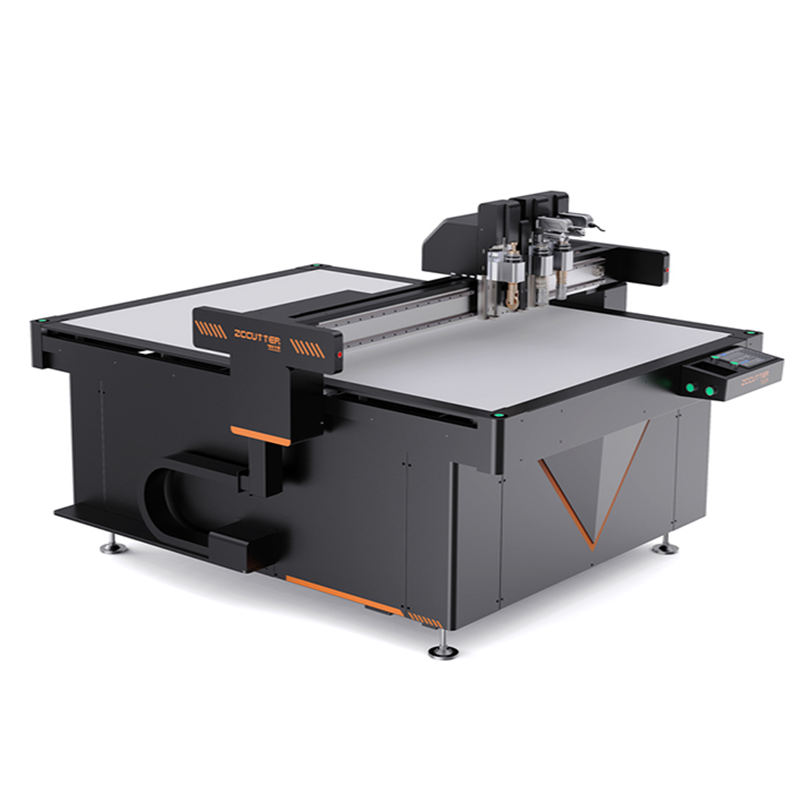
Modern global manufacturing operates on a shared sourcing model. The phrase "Chinese machinery" no longer implies cheap domestic parts. Today, high-end Chinese equipment integrates the exact same core components found in European machines. Manufacturers source premium parts globally. They then assemble them in regions offering labor and overhead efficiencies. You pay for the assembly location, not necessarily a difference in component quality.
We must look under the hood. The "engine" of a high-performance cutter dictates its output. We can break down these core components to see where real value originates.
The drive system acts as the heartbeat of the machine. ZCCUTTER utilizes top-tier imported servo motors and planetary gearboxes. These match the specifications demanded by strict industry standards. High-end servos prevent skipped steps during rapid accelerations. They ensure the cutting head maneuvers swiftly and accurately. You get smooth curves and sharp corners without mechanical lag.
High-precision rails directly impact cutting tolerance. Substandard rails degrade quickly. They introduce vibrations into the cutting head. ZCCUTTER relies on heavy-duty, internationally recognized linear guides. These guides maintain structural rigidity. They absorb kinetic energy during fast directional changes. Your machine holds tight tolerances even after thousands of operational hours.
Legacy brands often force you into proprietary tool ecosystems. You must buy their specific blades at inflated prices. ZCCUTTER champions modularity. The tool heads accept standard industry blades. This compatibility avoids expensive vendor lock-ins. You can source consumables locally. You maintain high cutting quality while controlling your daily operating costs.
Furthermore, build quality extends beyond moving parts. Frame stability prevents resonance. Bed flatness ensures consistent cutting depths. Intelligent vacuum zoning holds materials firmly in place. These elements differentiate true industrial machines from entry-level toys. The table below illustrates the component alignment between ZCCUTTER and legacy European systems.
Component Category | Legacy European Brands | ZCCUTTER Strategy | Impact on Performance |
|---|---|---|---|
Servo Motors | Tier-1 Global Brands | Tier-1 Global Brands | Identical acceleration and positioning accuracy. |
Linear Guides | Premium Imported Rails | Premium Imported Rails | Ensures long-term mechanical tolerance and stability. |
Tooling Ecosystem | Proprietary (Locked) | Open Architecture | Drastically reduces daily consumable expenses. |
Chassis Assembly | High-Cost Region | Optimized Hub (China) | Reduces initial purchase price by 40-60%. |
Financial clarity drives smart procurement. We must compare the base machine costs directly. Legacy systems carry enormous overhead. You pay for their regional labor rates, legacy pensions, and extensive marketing budgets. ZCCUTTER eliminates these bloated costs. The price disparity originates purely from assembly overhead and supply chain efficiency. It does not stem from component downgrades. You keep capital in your business.
Operating expenses further widen the financial gap. Legacy brands treat your production floor as a recurring revenue stream. Consumables represent a major hidden cost. Proprietary blades and specialized cutting mats carry heavy brand markups. By utilizing standard industry consumables, ZCCUTTER slashes these daily expenses. You gain absolute control over your procurement strategy.
Software introduces another critical expense layer. Legacy manufacturers often force users into expensive annual software subscription models. If you stop paying, your machine stops running. ZCCUTTER utilizes open-source and compatible CAD integration. You own the workflow. You do not face unexpected licensing fees or forced upgrades.
We can model a transparent return on investment scenario. This requires looking at operational realities. Let us establish clear assumptions for a standard manufacturing environment.
Calculate Hourly Cost: Factor in machine depreciation, electricity, and operator wages.
Assess Material Yield: Measure how accurate cutting reduces scrap material.
Determine Shift Volume: Model the output for single-shift versus double-shift operations.
Consider a facility running a standard single shift. A legacy machine might cost $150,000 upfront. A comparable ZCCUTTER system might cost $70,000. The European system requires five years to break even. The ZCCUTTER system frequently achieves break-even within 8 to 14 months. The chart below summarizes a typical cost recovery timeline.
Chart: Estimated ROI Breakeven Timeline (Single Shift) | |||
Machine Type | Initial Acquisition Cost | Annual Consumable Cost | Estimated Breakeven Point |
|---|---|---|---|
Legacy European Brand | $150,000+ | $12,000 (Proprietary) | 48 - 60 Months |
ZCCUTTER System | $70,000 (Estimated Avg) | $4,000 (Standard) | 8 - 14 Months |
Integrating international machinery requires rigorous compliance checks. European and North American facilities operate under strict safety standards. You cannot compromise on operator protection. ZCCUTTER machines secure full CE certification. They integrate robust emergency stop protocols directly into the hardware framework. Advanced safety sensors surround the cutting bed. The machine halts instantly if an operator breaches the active cutting zone. These systems meet exacting Western facility standards flawlessly.
Logistics present a temporary hurdle. Overseas shipping requires realistic planning. A typical transit timeline spans four to six weeks from port to port. Port-to-floor logistics add another week. You must factor this lead time into your project schedule. Standard installation processes remain straightforward. Clear documentation and modular chassis designs accelerate the commissioning phase. Your maintenance team can often finalize setup with remote factory guidance.
A machine only produces what your software commands. Seamless file handling eliminates production bottlenecks. The ZCCUTTER operating system accepts standard vector file formats. It effortlessly imports DXF, PDF, PLT, and AI files. Your design department does not need to reinvent their entire workflow. They simply export files as usual.
Integration with existing ERP or MES systems requires realistic expectations. Seamless integration happens when routing simple production counts or automated file queueing. However, complex bidirectional data syncing might require minor workarounds. You may need custom scripts to push detailed machine analytics back into a legacy ERP. The open architecture of the controller makes these scripts possible. You are never locked out of your own data.
No single machine fits every possible manufacturing scenario perfectly. You must align the equipment capabilities with your actual daily requirements. Understanding your specific operational profile prevents costly procurement mistakes.
ZCCUTTER excels in high-mix, mid-to-high volume environments. Facilities processing packaging, technical textiles, composite materials, and commercial signage see massive benefits. These industries require fast tool changes and standardized cutting. They prioritize rapid financial returns. If your facility shifts between cutting corrugated board in the morning and vinyl in the afternoon, this system handles the transition smoothly.
Certain operations should pause before transitioning. Hyper-niche applications represent a specific risk. If you require deeply proprietary software integrations built exclusively for aerospace legacy systems, proceed carefully. Additionally, consider your internal maintenance capabilities. If your facility absolutely requires guaranteed two-hour on-site factory technician responses, international machinery presents a challenge. Localized service networks exist, but they differ from direct factory employee dispatch.
Smart operators easily mitigate international support risks. You must handle maintenance proactively. Virtual diagnostics bridge the geographical gap effectively. Factory engineers can access the machine interface remotely. They troubleshoot software and parameter issues in real time. For hardware, secure a reliable pipeline of critical spare parts locally. Keep extra belts, blades, and basic relays on your shelf. The use of standard global components means you can often buy replacement servo drives or sensors from domestic industrial suppliers. You do not have to wait for overseas shipping during a critical breakdown.
The manufacturing landscape has shifted fundamentally. Paying a massive 50% premium is no longer a strict requirement for achieving high-tolerance automated cutting. Globalized component sourcing levels the playing field. Equipment like the ZCCUTTER proves you can secure industrial-grade reliability without crippling your capital budget. You can modernize your floor, increase material yields, and retain control over your software ecosystem.
Your next step requires practical validation. Do not rely solely on spec sheets. Request a custom sample cut using your exact operational materials. Send your toughest technical fabrics or thickest composites. Evaluate the edge quality directly. Run a localized return on investment calculation based on your specific labor rates and shift schedules. Let the data drive your final procurement decision.
A: Spare parts are highly accessible. ZCCUTTER uses standard, non-proprietary global components. You can source parts like linear guides, relays, and servo motors from local industrial suppliers in Europe or North America. You do not have to wait for international shipping for common wear items.
A: No specialized programming skills are required. The control software features an intuitive, user-friendly interface. Operators with basic computer literacy can learn the workflow quickly. The learning curve is minimal because the system directly imports standard design files without requiring complex G-code coding.
A: There are no hidden fees. ZCCUTTER operates on a software ownership model, not a SaaS (Software as a Service) subscription model. You own the software license upon purchase. You will not face unexpected annual renewal fees to keep your machine operational.
A: Warranties are managed through a combination of remote support and local distributors. Factory technicians perform remote diagnostics to identify issues quickly. For defective parts, the company honors replacement SLAs (Service Level Agreements) and ships components promptly. Local distributors also provide hands-on support in many regions.

