


Views: 0 Author: Site Editor Publish Time: 2026-09-01 Origin: Site


The landscape of enterprise labeling is fundamentally changing. "High-volume" no longer just means printing millions of identical labels. Today, it increasingly means producing millions of labels spread across hundreds of distinct SKUs, complex variable data requirements, and tighter turnaround times. Brands demand agility. Traditional analog setups struggle heavily with the rapid agility required for modern high-volume demands. They often suffer from excessive downtime, expensive plate costs, and high material waste during changeovers. We must objectively evaluate how modern digital equipment handles these industrial-scale runs. You will learn exactly when it makes sense to transition your production lines. We will also explore how to calculate actual operational economics at high capacities without relying on standard vendor benchmarks. This guide provides actionable insights for navigating your next major press investment.
High-volume digital production is defined by agility and uptime, excelling in multi-SKU runs where traditional presses lose profitability to changeovers.
The break-even point between a digital and a flexo label printing machine is shifting; digital is increasingly cost-effective for runs that were historically considered "analog-only."
Hardware speed is only part of the equation; enterprise labeling software and RIP processing power are critical to preventing data bottlenecks in high-volume environments.
True Total Cost of Ownership (TCO) must account for digital ink/consumable costs vs. analog plate and waste reduction over a 3- to 5-year cycle.
Brand owner demands drive a massive shift in the printing industry. Shorter product lifecycles dominate retail shelves today. Seasonal packaging requires frequent label updates. Strict regulatory compliance forces companies to adjust ingredient lists constantly. These changes create a core business problem for manufacturers. You cannot simply run the same label for weeks at a time anymore. You must adapt quickly to diverse requirements.
Volume no longer equals simplicity. We must frame success criteria differently now. We do not measure success just by "labels per hour" anymore. Instead, we measure "saleable output per shift." A press might print incredibly fast. However, if you spend three hours setting up different SKU variations, your actual saleable output drops significantly. High volume now means managing high complexity efficiently.
Legacy systems suffer a massive cost of downtime. Setup times eat into profitable production hours. Job changes consume valuable shift time. Material waste piles up during every single changeover. We must analyze these impacts when running complex, multi-version jobs. Legacy analog presses lose their edge when operators must constantly swap plates and register colors for small-to-medium batches.
Audit your current job mix to identify average run lengths.
Group similar SKUs together to minimize substrate changeovers.
Measure setup waste precisely across all legacy presses.
Strategic comparison remains vital for any press investment. We evaluate the crossover point closely. You need to know when digital becomes more cost-effective. We compare digital directly to a traditional Flexo label printing machine. Historically, this break-even point sat around 10,000 linear feet. Today, advanced digital platforms push this boundary closer to 50,000 feet.
We must look at fixed versus variable economics. Flexo brings high fixed costs. You pay heavily for plates, setup time, and makeready waste. However, unit costs drop drastically at massive scale. Digital offers virtually zero setup cost. You need zero plates. It generates almost zero makeready waste. But you face higher per-unit consumable costs due to specialized inks and toners.
The hybrid reality proves highly practical. Converters rarely choose just one technology. They use both together in a complementary workflow. They route high-variation, medium-run jobs to digital platforms. They reserve their analog presses for massive, static, long-run jobs. This strategy maximizes overall plant profitability.
Cost Factor | Analog Processing | Digital Processing |
|---|---|---|
Setup Costs | High (Plates, labor, time) | Low (File preparation only) |
Makeready Waste | High (Hundreds of feet) | Minimal (Often under 10 feet) |
Consumable Unit Cost | Low (Bulk ink) | Moderate to High (Proprietary ink) |
Variable Data Capability | None (Static only) | Infinite (Every label unique) |
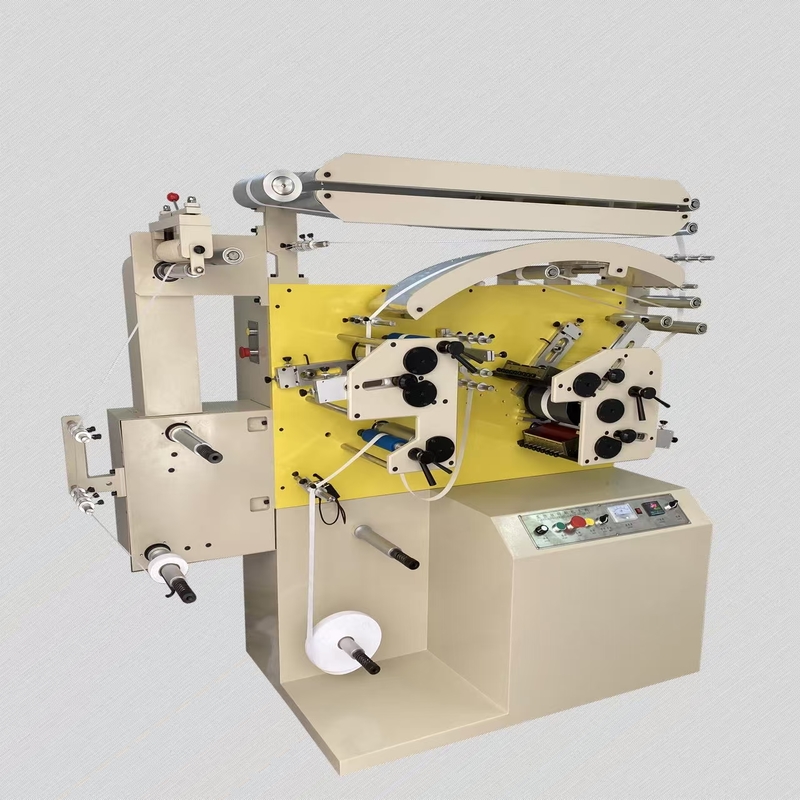
Throughput speeds define modern industrial presses. Early digital presses struggled to match analog speeds. Today, high-resolution systems maintain perfect registration at 70 to 100 meters per minute. They deliver this speed without sacrificing image quality. You get vibrant colors and crisp text consistently across long runs.
Printhead reliability is absolutely critical for high-volume environments. Industrial-grade inkjet maintains consistency across multi-hour continuous shifts. Dry toner systems perform equally well under heavy loads. They prevent banding, color shifting, or nozzle clogging. A reliable digital label pringting machine ensures maximum uptime for your facility. Automatic nozzle compensation masks any failing jets dynamically.
Automated web handling controls tension perfectly. Jumbo roll capacities minimize operator intervention. Operators spend less time splicing rolls and more time managing print queues. Advanced tension controls handle delicate films and heavy textured papers equally well. They prevent web breaks during high-speed runs.
In-line finishing prevents production bottlenecks. You must integrate varnishing, die-cutting, and slitting directly in-line. Offline finishing operations kill digital print speeds. Modern digital workflows utilize semi-rotary die-cutting or dual-laser cutting modules. These modules finish the product in a single pass.
Technology Module | Primary Function | High-Volume Benefit |
|---|---|---|
Piezo Drop-on-Demand | Ink droplet placement | Eliminates banding at 70+ m/min |
Closed-Loop Tension | Substrate management | Prevents registration drift on thin films |
Semi-Rotary Die Cutting | Inline finishing | Removes physical cylinder tooling changes |
Hardware-software synergy matters immensely. A high-speed press fails completely if the data cannot keep up. Many companies buy fast hardware but neglect their software infrastructure. The press ends up waiting for files to process. We consider software the invisible bottleneck in high-volume production environments.
Integration requirements are incredibly strict today. Enterprise labeling software pulls data directly from ERP or WMS systems. This automation builds job queues effortlessly. It eliminates manual data entry completely. Operators do not type in batch numbers or expiration dates. The system fetches them securely.
Raster Image Processing (RIP) handles heavy workloads. Variable data printing (VDP) includes unique barcodes, serialized QR codes, and dynamic graphics. Advanced RIP software processes these dynamic elements without slowing physical print speeds. The Digital Front End (DFE) caches static background images. It only processes the changing data for each frame.
Relying on desktop-grade design software for industrial queues.
Failing to map ERP fields correctly to label templates.
Ignoring network bandwidth requirements for heavy graphic files.
We address skepticism around digital running costs openly. Transparent assumptions guide smart investments. Many buyers fear expensive click charges or hidden maintenance fees. We must analyze these operational economics carefully before making decisions.
Consumables pricing requires deep, granular analysis. We compare click charges and monthly maintenance contracts. We measure actual ink coverage costs against traditional bulk ink. High-coverage labels cost more digitally. Low-coverage labels often cost less. You must average this across your unique job mix.
Facility needs demand serious attention. Climate control protects sensitive printing equipment. Humidity levels dictate how paper substrates behave under web tension. You must meet specific electrical power requirements. Clean-room considerations protect delicate printheads from airborne paper dust. Do not underestimate these environmental preparation costs.
Operator transition poses distinct risks. Teams shift from mechanical press operation to IT-centric workflow management. A veteran analog operator relies on wrenches, gears, and physical adjustments. A digital operator relies on color profiling, file prep, and software diagnostics. We must manage training risks carefully. Adoption curves take time. You should invest heavily in vendor-led training programs.
You need a structured framework to evaluate vendors. Define the application clearly first. Map specific substrates to digital ink compatibility. Test your films, foils, and papers against UV inkjet, water-based inkjet, or dry toner. Each ink chemistry behaves differently on specific topcoats.
Stress-test the vendor aggressively. Request detailed operational cost calculations based on your actual production files. Do not accept standard vendor benchmarks. Send them your hardest, most complex label files. Ask them to calculate the exact cost-per-label including ink, maintenance, and expected waste.
Proof of concept remains non-negotiable. Mandate a live print test at the vendor facility. Focus heavily on color matching your critical brand spot colors. Verify the variable data RIP speed in real-time. Watch the press handle material splices.
Compile a diverse portfolio of your typical label files.
Measure your current analog setup times and waste metrics accurately.
Establish internal metrics for an acceptable ROI timeframe.
Engage sales teams only after defining your substrate needs clearly.
A digital platform supports high-volume production beautifully. It does not win by beating analog on raw static speed. Instead, it wins by eliminating setup constraints completely. It maximizes continuous uptime across varied shifts. It enables true mass customization for demanding brands.
Buyers should audit their current job mix carefully. Identify the exact percentage of work that falls below the traditional analog break-even point. Move those short and medium runs to digital platforms. This strategy frees up your legacy presses to do what they do best: print massive, static orders.
Take action today to modernize your print floor. We recommend requesting a substrate sample pack from leading vendors. Schedule a technical consultation to review your specific workflow challenges. Explore how modern digital architecture can transform your operational agility and profitability.
A: Rarely. They function as complementary systems. Flexo remains superior for ultra-long, highly static runs where setup costs are absorbed. Digital handles complex, multi-SKU, and variable data runs with significantly higher profitability due to zero setup time.
A: It depends heavily on job complexity and color counts. However, it typically falls between 10,000 to 50,000 linear feet. Variables like analog plate costs and high makeready waste shift this number favorably toward digital every year.
A: Modern industrial presses come equipped with inline analog stations for varnishing or priming. They also feature semi-rotary or laser die-cutting modules. This integration delivers fully finished, saleable rolls in a single continuous pass.
A: On entry-level machines, VDP can bottleneck speeds. On high-volume enterprise machines, advanced digital front ends (DFE) and robust RIP software ensure heavy data processes at or above the physical running speed of the press.

