


Views: 0 Author: Site Editor Publish Time: 2026-09-15 Origin: Site


Investing in industrial printing equipment represents a major capital expenditure. You must align this purchase precisely with your actual production workflows. While digital printing currently dominates the short-run market, traditional flexography remains the undisputed industrial standard for specific high-volume applications. Many businesses struggle to identify the exact tipping point where conventional presses outperform digital alternatives. This evaluation gap often leads to misallocated funds and severe production bottlenecks on the factory floor.
Our purpose here is to provide a strictly technical and commercial framework. You will learn how to determine if a Flexo label printing machine fits your specific industry applications. We will explore substrate requirements and analyze ROI timelines to ensure operational success. We aim to equip you with the insights needed to make an informed, data-driven equipment choice.
Flexo label printing machines are commercially viable primarily for mid-to-long run lengths where unit cost reduction outpaces initial plate setup costs.
Primary application fits include food and beverage (shrink sleeves, flexible packaging), pharmaceuticals (tamper-evident labels), and high-volume logistics.
Machine configuration (Inline vs. Central Impression) directly dictates which substrates—and therefore which applications—can be reliably processed without registration errors.
Implementation success requires factoring in operator skill curves, tooling costs (plates/cylinders), and environmental compliance for ink systems.
Deciding between digital and flexographic printing requires a deep dive into your operational metrics. You must understand your average run lengths, ink consumption, and finishing requirements. A standard flexo label printing machine delivers exceptional value, but only when deployed under the right strategic conditions.
Every printing technology has a distinct run-length tipping point. Digital presses excel in ultra-short runs with high variability. Conversely, flexography outpaces digital efficiency when jobs exceed 5,000 to 10,000 meters. The exact break-even point depends heavily on your SKU variety. If you print million-label runs of a single design, flexo is undeniably superior. Initial setup requires polymer plates and manual registration. However, once running, the machine easily eclipses digital throughput. You amortize the setup costs across a massive volume, dropping the per-label cost to fractions of a cent.
High production speeds fundamentally alter your cost-per-label economics. Modern presses operate upwards of 150 to 200 meters per minute. Over an extended eight-hour shift, they output staggering volumes. Furthermore, bulk flexographic inks are significantly cheaper than proprietary digital toners or inkjet fluids. You purchase solvent, water-based, or UV inks in large buckets. This bulk purchasing power drastically drives down unit costs. To visualize this dynamic, consider the operational comparison chart below.
Print Volume Economics Comparison
Production Metric | Digital Printing | Flexographic Printing |
|---|---|---|
Setup Time | Minimal (Minutes) | Moderate (30-60 Minutes) |
Consumable Costs | High (Proprietary Inks) | Low (Bulk Inks) |
Optimal Run Length | Under 5,000 meters | Over 10,000 meters |
Speed Capabilities | Average (30-70 m/min) | High (150-200+ m/min) |
Another strategic advantage involves single-pass production capabilities. You can integrate multiple inline finishing processes directly into the press. Modern equipment allows printing, cold foiling, varnishing, die-cutting, and slitting in one continuous web movement. You eliminate the need to move printed rolls to offline finishing machines. This integration reduces labor costs, minimizes material waste from re-registration, and significantly shortens overall lead times. Offline finishing introduces extra handling steps. Inline processing keeps the product moving swiftly out the door.
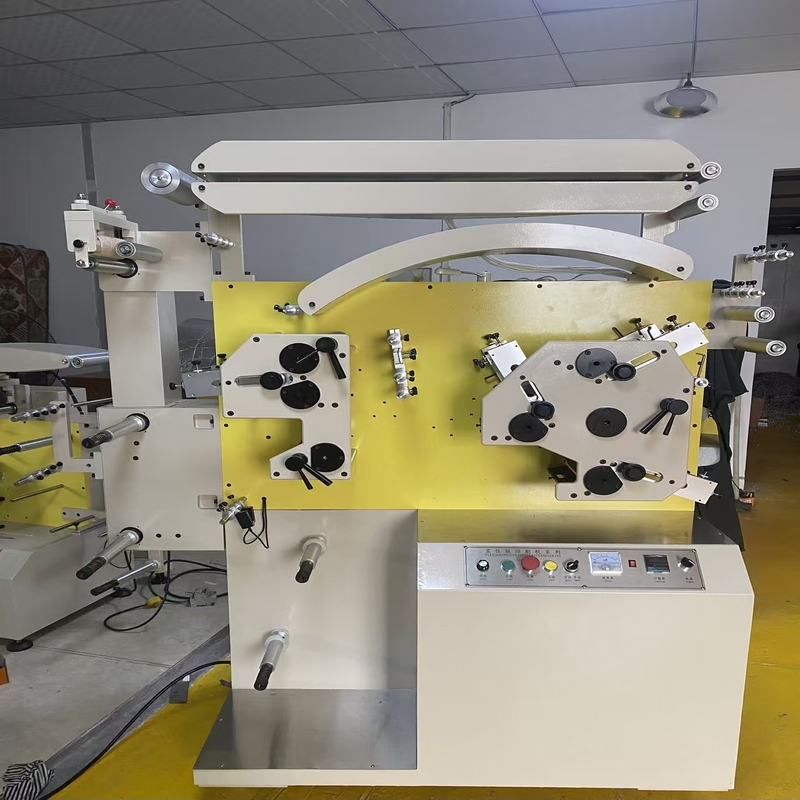
Specific industries demand rigorous packaging standards. They require durable materials, precise brand colors, and specialized functional features. Flexography consistently meets these rigid sector requirements.
The food and beverage sector operates under strict consumer safety regulations.
Requirements: You must use FDA-compliant or migration-compliant ink systems. These typically include water-based inks or low-migration UV inks. The industry heavily utilizes shrink sleeves, flexible pouches, and wraparound labels.
Flexo Advantage: Flexography provides incredibly consistent color density over million-label runs. It ensures strict Pantone matching for global brand adherence. Additionally, specific press configurations handle unsupported films and stretchable shrink sleeves effortlessly.
Healthcare packaging leaves zero room for error. A single illegible word can cause severe regulatory or health consequences.
Requirements: Applications require extreme legibility for micro-text. They demand tight registration tolerances, tamper-evident materials, and complex multi-layer (peel-and-read) constructions.
Flexo Advantage: You can seamlessly integrate inline 100% vision inspection systems. These cameras verify every printed label against a digital master. Furthermore, inline UV curing stations produce smudge-proof, chemical-resistant finishes that survive harsh clinical environments.
Cosmetic and household brands rely on shelf appeal to capture consumer attention.
Requirements: These labels need high-end embellishments like metallic inks, tactile varnishes, and cold foil. They must also offer durability against moisture or repeated squeezing, as seen with shampoo bottles.
Flexo Advantage: The modular nature of inline presses allows you to combine multiple print stations and finishing modules. You can apply a primer, print eight colors, add cold foil, and finish with a tactile varnish all in one pass. You achieve premium aesthetics without sacrificing web speed.
Supply chains require robust tracking labels that withstand abusive environments.
Requirements: This sector uses high-volume thermal transfer printable materials and heavy cardstocks. Labels require harsh-environment durability to survive global shipping routes.
Flexo Advantage: Flexo provides unmatched high throughput for blank or pre-printed die-cut labels. It features heavy-duty die-cutting stations capable of processing thicker, abrasive substrates that would rapidly damage digital print heads.
Your chosen material heavily dictates your production success. Flexography is remarkably versatile, but you must match your substrate to the correct ink chemistry and tension control systems.
You can adapt flexographic presses to handle vastly different surface textures. Porous materials include rough kraft papers and deeply textured wine labels. These absorb ink quickly, requiring specific plate dot structures to prevent dot gain. Conversely, ultra-smooth synthetics like PE, PP, PET, and BOPP are non-porous. Ink sits on the surface of these films. You must ensure the substrate has an appropriate dyne level (surface tension) so the ink adheres properly without flaking off during finishing.
Substrate stretch ruins print registration. When printing on extensible materials like LDPE films, traditional mechanical presses often pull the web too hard. This causes colors to misalign. Modern servo-driven presses solve this problem. They utilize independent motors at each print station. These motors communicate with electronic tension controllers to advance the web gently. They handle highly stretchable substrates without stretching them, eliminating costly registration drift over long runs.
The relationship between your anilox roll, ink chemistry, and substrate is highly technical. The anilox roll meters the exact volume of ink transferred to the plate.
UV Inks: Excellent for non-porous synthetics. They cure instantly under UV light, providing high gloss and chemical resistance.
Solvent Inks: Preferred for flexible packaging and shrink sleeves. They dry quickly through evaporation and bite into plastic films well.
Water-Based Inks: Standard for porous paper labels and corrugated tags. They are environmentally friendly and widely used in food-safe applications.
You must carefully select anilox cell volumes that match your specific ink viscosity and substrate absorption rates.
Not all presses are built identically. The mechanical architecture of the machine determines how the web travels through the print stations. You must match this configuration to your primary substrate profile.
Inline presses arrange individual print stations in a horizontal sequence. The web travels in a straight line from one station to the next.
Best for: Pressure-sensitive (self-adhesive) labels, folding cartons, and standard industrial tags.
Evaluation Criteria: They offer excellent modular scalability. You can easily add or remove stations. Operators enjoy easy access to the print decks for quick changeovers. However, they struggle with highly extensible, ultra-thin films compared to Central Impression models because the web is unsupported between print stations.
CI presses feature a single, massive impression cylinder. All print stations surround this central drum.
Best for: Flexible packaging, shrink sleeves, and ultra-thin unsupported films.
Evaluation Criteria: They deliver superior registration accuracy on stretchable materials. The web locks onto the large central drum, preventing any stretch or movement as multiple colors are applied. However, integrating complex inline finishing modules (like die-cutting) is generally more difficult and less common than on inline presses.
Stack presses stack individual print stations vertically, one on top of the other.
Best for: Heavy-duty applications, wide-web industrial bags, or simple multi-color printing where tight registration is less critical.
Evaluation Criteria: They occupy a smaller floor footprint and often present a lower capital cost. You can print on both sides of the web easily. Nevertheless, they are largely outdated for prime, high-quality retail label applications due to inherent limitations in holding ultra-tight registration.
Adopting flexographic technology introduces specific operational risks. You must evaluate these factors before signing a purchase agreement.
Flexo requires physical tooling. You need a transparent assessment of polymer plate production costs. Every new design requires a new set of plates. You also face press downtime during plate mounting and registration setup. Additionally, you must maintain a physical cylinder inventory to accommodate different repeat lengths (label sizes). These pre-press expenses dictate why flexo is unsuitable for micro-runs. You must absorb these tooling costs across large volumes.
You must acknowledge the steep learning curve associated with traditional printing. Achieving perfect pressure and registration adjustments manually takes years of operator experience. A skilled pressman is a valuable, hard-to-replace asset. To mitigate this risk, evaluate the ROI of investing in automated, servo-driven machines. Modern automation features like auto-registration and motorized impression setting drastically reduce your reliance on specialized manual labor.
Your facility must support the specific requirements of your chosen ink system. If you run solvent inks, you must evaluate ventilation requirements and explosion-proof handling procedures. If you opt for UV LED systems, you must ensure adequate electrical curing power. If you utilize water-based inks, you must implement proper wastewater management systems for press washdowns. Ignoring these facility constraints leads to costly regulatory fines.
When narrowing down vendors, use a rigorous checklist.
Request comprehensive print trials on your actual production substrates, not just the manufacturer's preferred demo paper.
Evaluate the Original Equipment Manufacturer (OEM) service level agreements (SLAs). Machine downtime is incredibly expensive.
Calculate long-term operational viability over a 5-year period. Factor in bulk ink savings, tooling wear, and energy consumption.
Purchasing a flexographic printing system requires careful strategic alignment. This technology is easily justified when long run lengths, specific inline finishing requirements, and difficult substrates intersect. It offers unmatched speed and durability for the food, pharmaceutical, and logistics sectors. However, we strongly advise against this technology if your business model relies heavily on micro-runs, high SKU churn, or hyper-variable data.
To move forward, we encourage you to request a custom ROI audit based on your specific job mix. Conduct a rigorous, substrate-specific print trial with your shortlisted vendors. Finally, consult directly with an applications engineer before finalizing your machine specifications. Proper upfront planning guarantees years of profitable, high-speed production.
A: The minimum viable run length typically falls between 5,000 and 10,000 linear meters. This threshold ensures the high speed and low consumable costs offset the initial time and expense required for polymer plate production and press setup.
A: Yes, but success depends on the machine configuration. Inline presses handle standard pressure-sensitive papers beautifully but may struggle with thin, unsupported films. Central Impression (CI) presses easily handle stretchable, unsupported films due to their large central drum.
A: Food packaging often requires water-based or low-migration UV inks for safety. Shrink sleeves and flexible films frequently use solvent inks for better adhesion. Premium cosmetics usually rely on standard UV inks for high gloss and chemical resistance.
A: You incur costs for photopolymer plates every time a design changes. You also need flexible or solid rotary dies for cutting new label shapes. Frequent design changes drive tooling costs up, requiring careful job grouping for profitability.

