


Views: 0 Author: Site Editor Publish Time: 2026-09-08 Origin: Site


Purchasing industrial printing equipment represents a high-stakes capital expenditure. This decision carries long-term implications for your production capacity. It also directly impacts your everyday operational bottlenecks. Navigating complex equipment specifications often creates confusion. You must balance bold vendor promises against shifting market demands. Facility managers frequently struggle to weigh short-run flexibility against high-volume efficiency.
We designed this article to provide a vendor-neutral, criteria-based evaluation framework. You will learn how to confidently shortlist the right equipment for your facility. We skip the sales pitches. Instead, we focus on measurable production baselines and hardware realities. You will discover how to evaluate technical specifications logically. We also explore the crucial post-purchase realities governing actual profitability.
Assess actual production baselines before reviewing technical specifications.
Evaluate Total Cost of Ownership (TCO), factoring in tooling, downtime, and energy—not just the initial sticker price.
Validate the choice of flexo over digital based on precise run-length thresholds and substrate requirements.
Prioritize vendor infrastructure for installation, operator training, and post-sale technical support.
You cannot evaluate a machine without a strict internal baseline. Establish clear frameworks to measure current bottleneck areas. Look closely at your average changeover times. Measure actual print speeds against theoretical maximums. Compare these current metrics against your projected growth over the next three to five years. You must define what success looks like before engaging vendors.
The specific materials you print on dictate necessary press configurations. You might process heat-sensitive shrink sleeves. Perhaps you handle standard BOPP packaging. You might specialize in highly textured wine labels. Each substrate behaves differently under tension. A standard configuration rarely handles all materials equally well. Shrink sleeves require precise chill rolls. Textured papers demand higher pressure capabilities. Define your primary substrates early. This prevents expensive retrofits later.
Define the exact volume at which traditional equipment outperforms digital alternatives. Short runs typically favor digital presses. Long, continuous runs strongly favor traditional systems. You must map your average job lengths. Identify the precise linear footage where a flexo press becomes more profitable. This mathematical threshold eliminates guesswork during the procurement process.
Your target client base dictates industry standards. Food-grade packaging requires specific migration-compliant inks. Pharmaceutical labels demand absolute text clarity and color consistency. You must adhere to Flexographic Technical Association (FTA) tolerances. Ensure the machine supports these strict regulatory requirements out of the box. Do not assume compliance. Ask vendors to demonstrate exact regulatory capabilities during live trials.
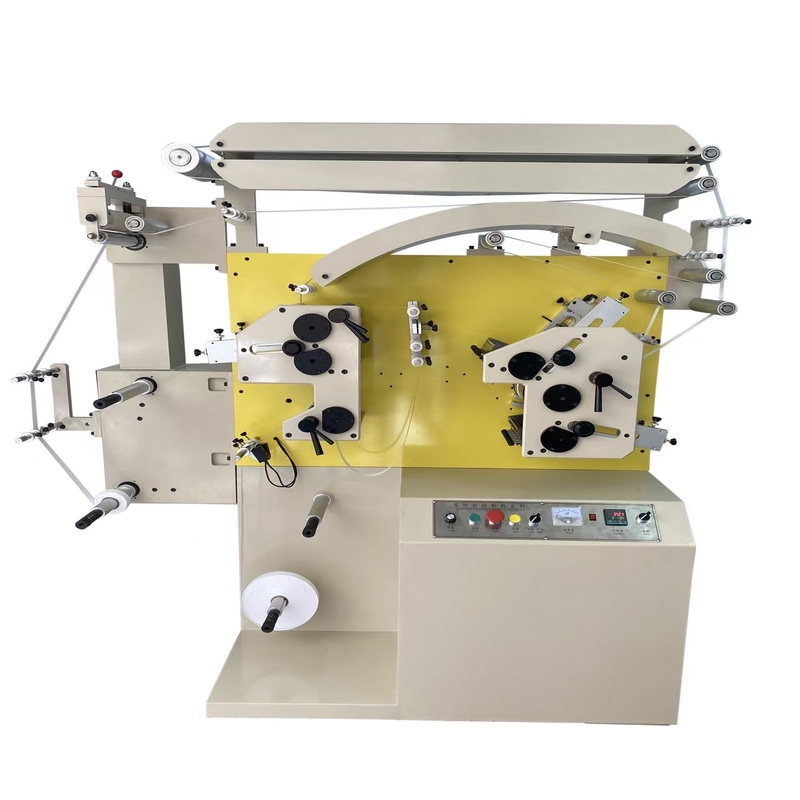
Machine specifications often look impressive on paper. You must translate these numbers into daily operational outcomes. Focus on how core features solve your specific floor challenges.
Choosing the right web width directly impacts your product mix. Narrow web machines typically run up to 16 inches. Mid-web presses handle wider formats. Narrow formats excel at standard consumer goods packaging. Mid-web sizes accommodate larger pouches and flexible packaging. Evaluate the machine's modularity carefully. A truly modular Flexo label printing machine allows you to add color stations later. This future-proofs your investment as client demands evolve.
Drying technology affects energy consumption and material compatibility. You must choose between standard UV, LED-UV, and hot air systems. Frame this as a feature-to-outcome decision. Hot air works well for water-based inks. Traditional UV cures rapidly but generates significant heat. LED-UV offers a superior alternative. It consumes far less electricity. It also transfers minimal heat to the web. This makes LED-UV ideal for delicate shrink sleeves.
Modern printing facilities face severe labor shortages. You cannot rely solely on veteran operators. Address the critical need for automation. Look for robust auto-registration systems. Demand precise pre-register capabilities. Automated pressure settings reduce makeready waste significantly. These features decrease your dependency on highly skilled manual intervention. They turn complex setups into repeatable, push-button processes.
Never ignore the practical reality of floor space. Industrial printing equipment requires substantial room. You must account for the machine's footprint. Consider the necessary clearance for material loading. Factor in specific HVAC requirements for exhaust and cooling. Evaluate workflow integration within your existing plant layout. Poor facility integration leads to material handling bottlenecks.
Buyers often fixate on the initial purchase price. This sticker price represents only a fraction of your financial commitment. You must calculate ongoing operational expenses to understand the true financial impact.
Move beyond the capital expenditure. Calculate your ongoing operational expenses rigorously. Tooling forms a massive part of this budget. You must purchase photopolymer plates constantly. Anilox rollers require regular replacement and cleaning. Calculate your projected ink consumption. Factor in preventive maintenance parts like seals and doctor blades. These recurring expenses impact your margins daily.
Downtime destroys profitability faster than any other factor. Build a transparent assumption model. Separate planned maintenance from unplanned breakdowns. Planned maintenance stabilizes production. Unplanned breakdowns cost hundreds of dollars per hour. Emphasize the financial impact of parts availability. A machine sitting idle while waiting for overseas shipping is a massive liability. Domestic parts availability is non-negotiable.
The skilled labor shortage is a harsh industry reality. Recruiting experienced printing technicians grows harder every year. Evaluate how an automated press reduces the training curve. Intuitive touchscreen interfaces help junior operators learn faster. Servo-driven adjustments prevent catastrophic manual errors. Better equipment improves operator retention. Nobody wants to run an unreliable, constantly jamming machine.
The debate between traditional and digital printing confuses many buyers. You need a clear, skeptical breakdown of where each technology truly belongs. Avoid making decisions based on industry hype.
Production Factor | Digital Press | Traditional Flexo Press |
|---|---|---|
Run Length | Micro to short runs (Under 10,000 ft) | Medium to ultra-high volume |
Variable Data | Excellent (Serialization, unique codes) | Poor (Requires offline processes) |
Makeready Waste | Minimal to none | Moderate (improving via automation) |
Inline Finishing | Limited or requires near-line setup | Superior (Die-cutting, foiling inline) |
Color Matching | CMYK simulation approximations | Exact Pantone/metallic spot colors |
Review this matrix against your actual customer orders. Traditional presses outperform digital models in ultra-high volume scenarios. They also dominate when clients demand specific metallic inks. Complex inline finishing remains a distinct advantage for traditional setups. Digital shines when handling variable data and micro-runs.
Many buyers feel caught between technologies. They need the variable data capabilities of digital systems. They also need the high-speed inline converting of traditional presses. Hybrid presses offer a compelling middle ground. They combine digital inkjet stations with traditional print decks. This allows for massive flexibility. However, hybrid systems carry premium price tags. Validate your volume before pursuing this route.
Do not purchase based solely on legacy familiarity. We frequently see companies buy traditional machines simply because they always have. If your actual customer orders trend heavily toward micro-runs, pivot your strategy. Clinging to familiar but mismatched technology creates massive sunk costs.
The real partnership begins after you sign the purchase order. Post-purchase realities dictate how quickly you achieve a return on investment. Evaluate vendors strictly on their execution capabilities.
A standard, compliant installation process requires a strict Standard Operating Procedure (SOP). Detail what this looks like before buying. Ask about site preparation requirements. Clarify rigging responsibilities. Map out the timeline from factory delivery to the first commercial run. Delays during installation burn through your projected profits.
A press is only as profitable as the operator running it. Assess the vendor's commitment to training. On-site training proves far superior to remote modules. Ask how many days the vendor's technicians will spend at your facility. Ensure they train your staff on actual client files, not just generic test patterns.
Frame technical support as a primary buying factor. You must evaluate Service Level Agreements meticulously. Scrutinize their guaranteed response times. Check their remote diagnostics capabilities. Modern presses should allow technicians to log in remotely to troubleshoot software faults. Confirm domestic parts availability. Waiting weeks for a proprietary sensor cripples production.
Procurement missteps cost companies thousands of dollars. Avoid these frequent industry errors to protect your capital investment.
Mistake 1: Under-speccing to save budget. Buying a cheaper machine often leads to immediate bottlenecking upon installation.
Mistake 2: Ignoring secondary market value. Consider the standard depreciation of the chosen brand. Premium brands retain resale value better.
Mistake 3: Failing to involve operators. Lead press operators must participate in the evaluation and demo stages. They spot workflow issues managers miss.
Finalize your vendor shortlist using a structured logic path. Follow these exact steps:
Request for Proposal (RFP): Issue a detailed RFP demanding specific performance guarantees and downtime metrics.
Site Visits and Live Demos: Travel to the vendor facility. Run your own challenging substrates using your actual artwork files.
SLA Negotiation: Lock in maintenance terms, parts guarantees, and training schedules before discussing final pricing.
Choosing the right equipment requires balancing current production pain points against future scalability. You cannot rely on isolated technical specifications. You must view the machine as an integrated part of your broader production ecosystem. Assess your materials, measure your typical run lengths, and acknowledge your labor constraints.
Demand transparent operational data from your shortlisted vendors. Insist on live substrate tests before signing any contract. Do not accept theoretical speeds. You need proven, real-world metrics. Protect your investment by prioritizing domestic support and rigorous training programs.
Take action today. Download a comprehensive procurement checklist. Contact an independent equipment consultant to review your capacity numbers. View specific machine specifications critically to ensure they align with your strategic growth targets.
A: A realistic timeframe usually spans three to seven years. This depends heavily on your shift capacity and order volume. Highly automated machines reduce waste and setup times, accelerating your break-even point. Running multiple shifts naturally shortens the ROI window.
A: Modern presses feature modular designs, allowing for easier upgrades. However, retrofitting digital inkjet units onto older, traditional frames presents severe engineering limitations. If you anticipate needing hybrid capabilities, purchase a machine specifically designed for seamless digital integration.
A: Current manufacturing supply chain realities often dictate lead times of 6 to 12 months. Complex, custom-configured machines take longer. Manage your expectations and build this buffer into your facility's production planning to avoid capacity shortfalls.

